
A washer that stops with the tub full has a blocked or dead exit path — and the exit path is short: filter, hose, pump, and the switches that authorize them. Most cases resolve in one visit; a few resolve tonight without one.
Tonight's checks
Front-loaders hide a coin-trap filter behind a low front panel; opening it (towels ready) clears the classic sock-and-bobby-pin clog. Check the drain hose for kinks behind the machine and confirm it is not jammed too deep into the standpipe — a sealed fit siphons badly.
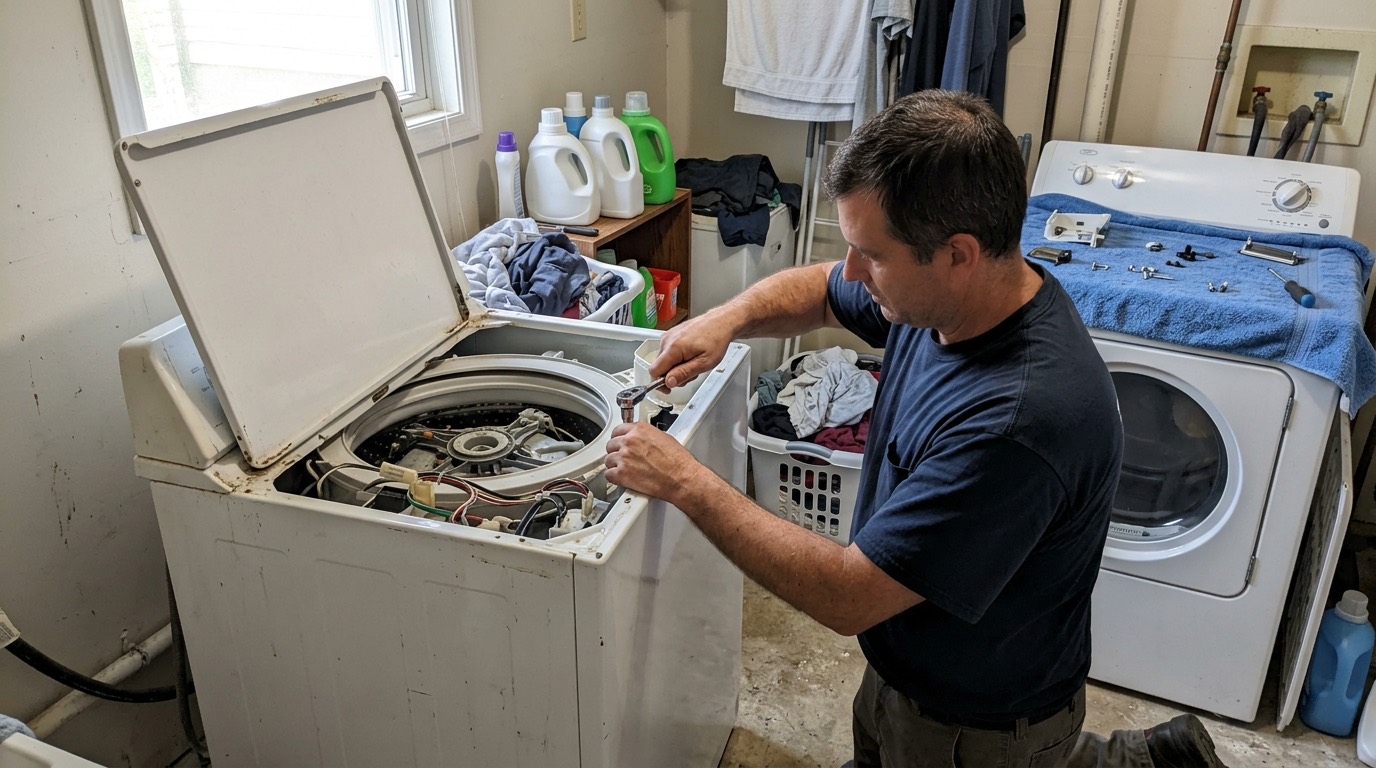
Top-loaders that fill and spin but never drain often have a lid switch problem; if the machine also will not spin, that cheap switch moved to the top of the list.
Pump failures and their sound
A humming, straining note at drain time is a pump fighting an obstruction; grinding or rattling is a pump eating its own impeller; silence when draining should start is electrical — switch, timer, or board. Each sound narrows the visit before it begins.
What hard water contributes
Greene County mineral load builds scale in pump housings and stiffens check valves, and detergent oversudsing — easy in soft-cycle machines with hard-water dosing habits — leaves residue that catches lint into slow-forming clogs. If drains have been gradually slowing for months, that is the pattern.
When to stop and call
Water on the floor, breaker trips at drain time, or a second full-tub strand in a week: stop running cycles and book it. Standing water plus repeated restarts is how a pump problem graduates into a motor problem — the cheap version of this repair is the early version.
Before you run one more cycle
Bail to below the tub rim if you need to open the door, check the trap and hose once, and stop there. Repeated drain attempts against a real blockage are how impellers strip and motors cook.
Book it with the model tag, the sound it makes at drain time, and how fast the problem developed — that last detail alone often names the part before anyone opens the cabinet.