
When baking goes inconsistent, the oven is usually lying about its temperature. The good news: ovens lie for a small number of mechanical reasons, all diagnosable, most fixable in one visit.
Prove the lie first
A $10 oven thermometer on the middle rack, set 350, checked at twenty minutes, tells you the size and direction of the error. Twenty-five degrees either way is calibration territory; wild swings or one dead zone point at parts.
The usual mechanical suspects
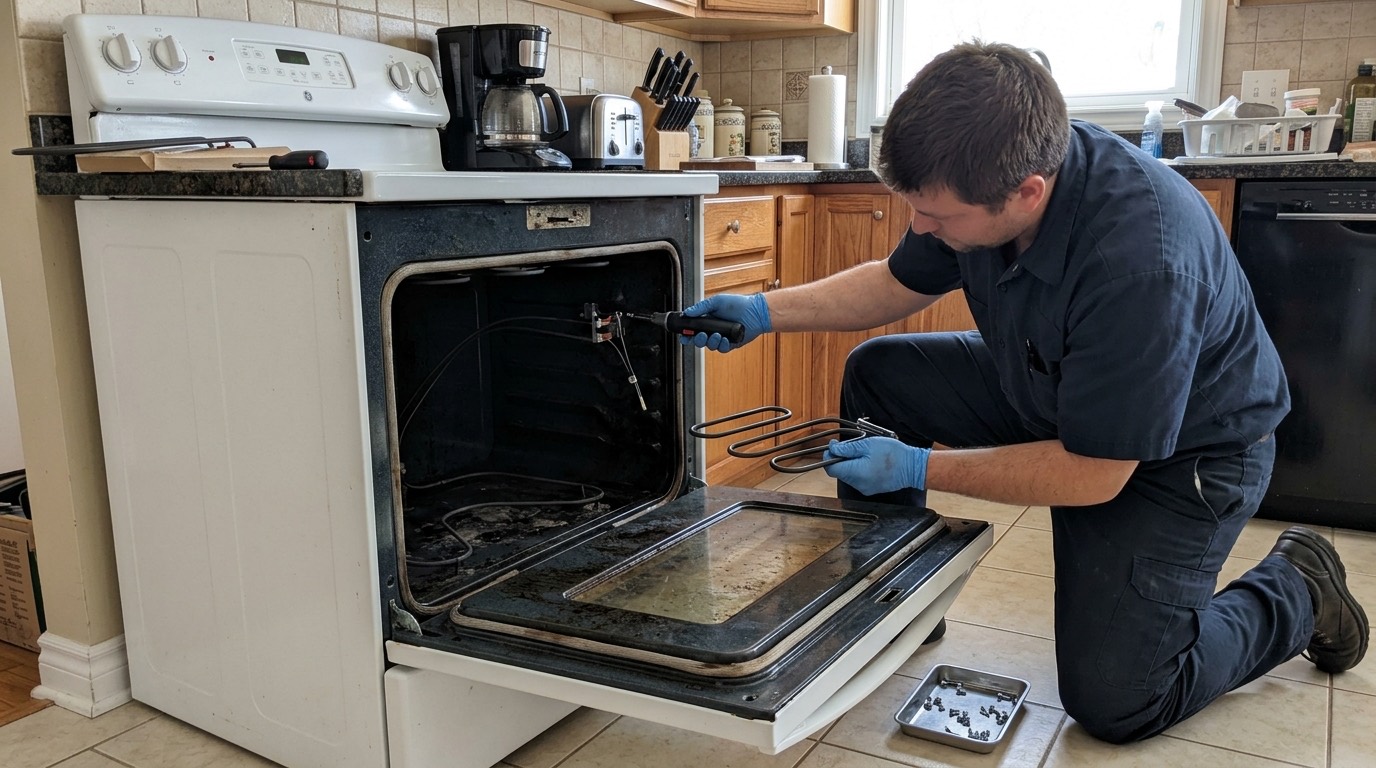
Electric: a bake element with visible blisters or dark patches, or a temperature sensor that has drifted out of spec — both cheap, both quick. Gas: a weakening igniter that delays or drops the flame mid-bake reads as temperature swing from the kitchen.
Convection adds a fan motor to the list; a failed one turns 'even baking' into a hot back corner and a cool door side.
Calibration and its limits
Most controls accept a plus-minus 35 degree offset — the right fix for a small consistent error, and a shrug against a failing sensor. A tech reads the sensor's resistance against spec in minutes and knows which case you have.
Springfield-specific notes
Storm-season power blinks can scramble control boards into odd behavior — a full two-minute breaker reset clears more oven weirdness than anyone expects. And self-clean cycles are the classic trigger for element and fuse failures in older ovens; if the oven died the day after cleaning itself, tell the tech exactly that.
What to tell the scheduler
Bring the thermometer's verdict — how far off, which direction, steady or swinging — plus the model number and whether the trouble started after a self-clean or a storm blink. That is enough to arrive with the likely sensor or element in hand.
Skip the guesswork bake tests after that: every scorched batch is data you already have.