
A dryer that spins with no heat has a short, well-known suspect list. What most owners do not know is that the number-one root cause sits behind the machine, not inside it: a lint-choked vent overheats the dryer until its safety hardware starts sacrificing itself.
The usual chain of events
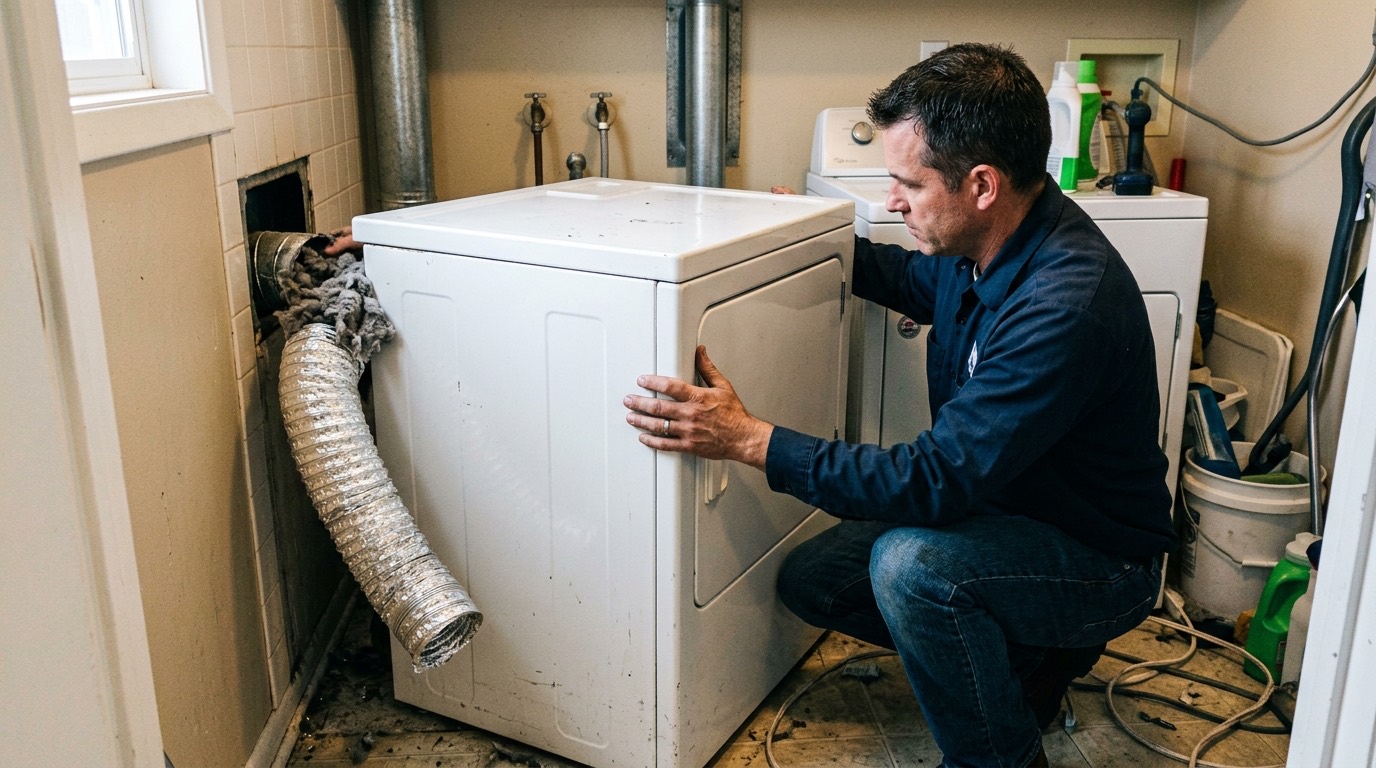
Restricted airflow makes heat linger; the thermal fuse blows to prevent a fire; the dryer keeps tumbling, cold. Replacing the fuse without clearing the vent just schedules the next failure — the honest repair treats both.
Electric models also lose heating elements and cycling thermostats; gas models lose igniters, flame sensors, and gas valve coils. All are routine, stocked-on-the-truck parts around Springfield.
Tell electric from gas symptoms
Electric: no heat at all usually means fuse or element; breaker halves matter too — a 240V dryer with one tripped leg tumbles cold. Gas: listen for the click and whumpf of ignition; a glow that never lights means the coils, no glow at all points to the igniter.
What you can check safely
The breaker, the lint screen, and the outside flap while the dryer runs — weak airflow there convicts the vent. Leave the cabinet, fuse, and gas path to the visit; those diagnoses take meters and manifold experience.
The Springfield wrinkle
Long vent runs are common in local slab ranches where the laundry sits mid-house, and spring storm season knocks vent caps loose and lets debris in. A yearly vent cleaning is the cheapest heat-repair insurance a Greene County laundry room can buy — and it shortens every drying cycle in between.
The order to act in
Check the breaker, then the outside flap airflow. If either looks wrong, you may have solved it; if not, book the visit and mention gas or electric, the model tag, and whether the no-heat came on suddenly or gradually. Sudden points at a part; gradual points at the vent.
Whatever the fix turns out to be, have the vent done the same day. A new fuse in a choked duct is a countdown timer, not a repair.