
Dishwasher complaints come in two flavors: water on the floor, or water that will not leave the tub. They point at different parts, and around Springfield the Ozarks' famously hard water has a hand in both — scale is this trade's background villain here.
Not draining: start at the simple end
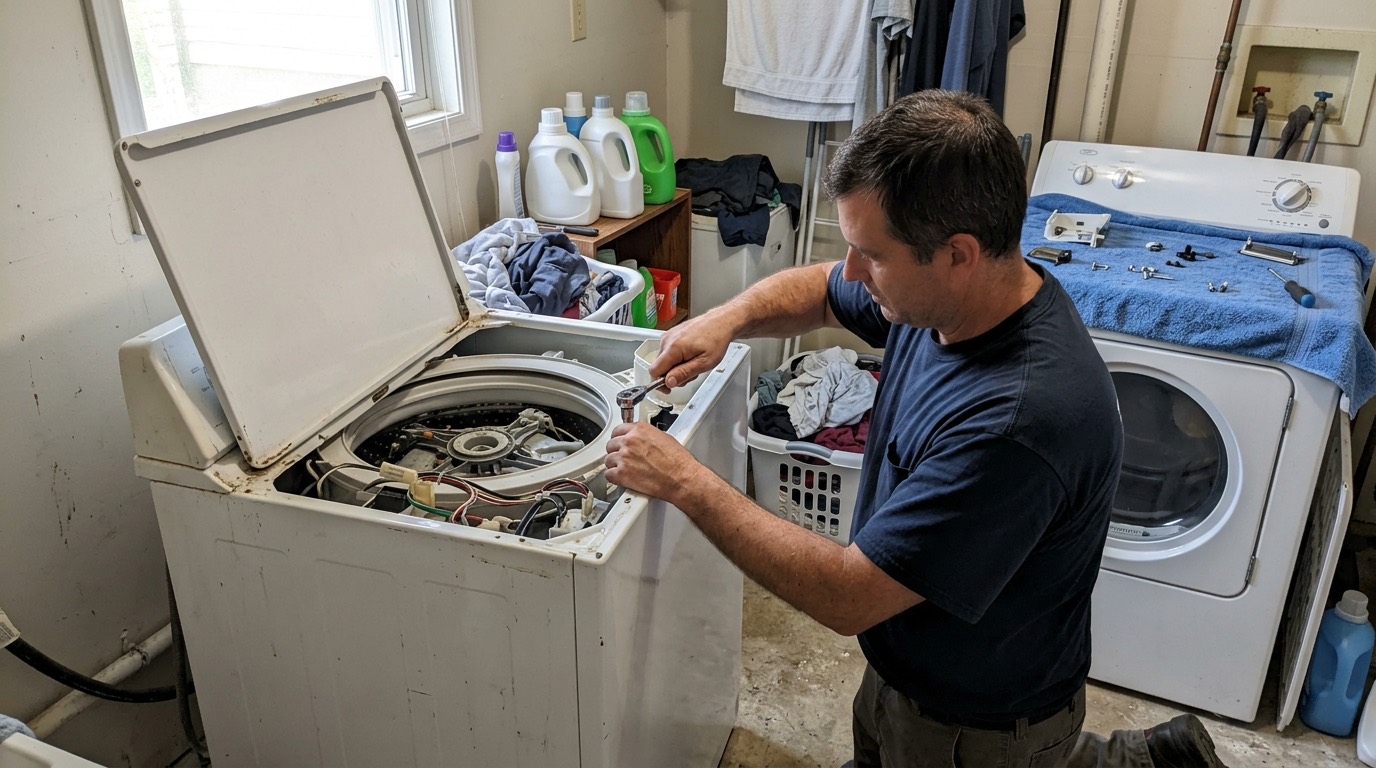
Standing water after a cycle usually means a blocked path: food solids in the sump filter, a kinked or clogged drain hose, or a garbage-disposal connection whose knockout plug never got removed after an install. Check the filter tonight — most twist out by hand and rinse in the sink.
If the filter is clean and the hose runs clear, the suspects become the drain pump and check valve — a parts-and-labor visit, and an affordable one when diagnosed early.
Leaking: read where the water shows up
Water at the front means door gasket, latch alignment, or oversudsing; water underneath means supply line, pump seal, or a cracked float housing. A white crust along the leak's edge is Springfield's signature — mineral scale has stiffened a gasket or wedged a valve.
Hard water also fakes leaks: etched, cloudy glassware and chalky film suggest the machine is fine but the water needs rinse aid and an occasional citric-acid cleaning cycle.
What a repair visit looks like
A tech runs a short test cycle, watches fill and drain, checks the sump, pump, valves, and hoses, and quotes from what the machine actually does rather than the symptom's name. Most drain and leak fixes are same-visit repairs with common parts.
Keeping it fixed in hard-water country
Scrape plates instead of rinsing them spotless (the filter needs some grit to work as designed), run the hottest sensible cycle monthly, and treat scale quarterly with a citric-acid cleaner. In Greene County water, that maintenance rhythm is the difference between a ten-year dishwasher and a five-year one.
Call it in with the right details
Say which flavor you have — floor water or standing water — plus the model number from the door-edge tag, whether it connects through a disposal, and what the filter looked like when you checked. Those four details usually let the tech arrive with the fix on the truck.
And if the machine is elderly and scale-worn, ask for the straight repair-versus-replace math while they are there. In this water, that honest answer saves the most money of all.